
In this month’s President's E-Magazine, we feature two distinguished ISAPS members and speakers at the upcoming World Congress in Cancún: Dr. Bianca Baican, winner of the ISAPS Olympiad Singapore 2025 award for her oral communication in the breast category, and Dr. Gustavo Jiménez Muñoz Ledo, a m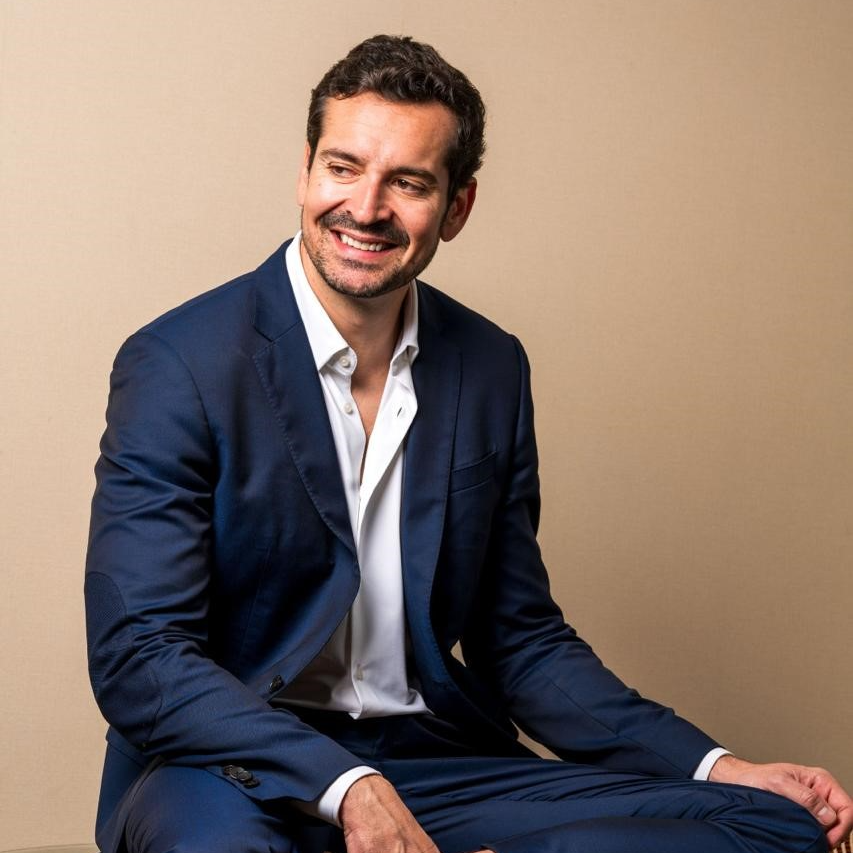 ember of the Patient Safety Advisory Focus Group on Breast. We invite you to read Dr. Gustavo Jiménez Muñoz Ledo’s interview below and Dr. Bianca Baican's here.
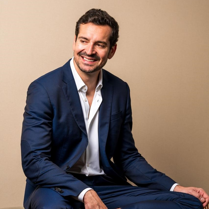
Dr. Gustavo Jiménez Muñoz Ledo is the ISAPS National Secretary (Elect) for Mexico and serves on the Patient Safety Advisory Focus Group on Breast. He will speak at the ISAPS World Congress in the session, You Be the Judge: Internal Bra in Aesthetic Breast Surgery, Necessary Innovation or Overused Adjunct? In this interview, he shares details about his upcoming talk, his experience caring for patients after breast cancer treatment, and what motivates him.
ISAPS: You will be speaking at the World Congress later this month as part of the new You Be The Judge section of the program. What makes your session, Internal Bra in Aesthetic Breast Surgery – Necessary Innovation or Overused Adjunct, debatable?
JIMÉNEZ MUÑOZ LEDO: The controversy begins with the terminology. “Internal bra” is a compelling marketing term, but it does not describe a single, standardized operation. It encompasses different strategies, including sutures, dermal flaps, muscle-based techniques, meshes, and acellular dermal matrices. Each deserves to be evaluated according to its specific indications and evidence.
My position is that there are valuable surgical principles behind the label. Additional support may be useful when tissue quality is poor, when the inframammary fold needs reinforcement, or when we are addressing instability in revision surgery. However, that does not make it necessary for every patient or a guarantee of permanent results.
What makes this an excellent topic for debate is the distinction between thoughtful innovation and routine overuse. We should ask which anatomical problem we are solving, what the chosen technique adds, and whether its benefits justify the additional risks and cost. I support individualized internal support, with clear terminology and honest communication about what we know and what remains uncertain. At our clinic, we apply this same patient-centered approach, selecting the most appropriate technique for each individual rather than using a standardized solution.
ISAPS: From your experience treating patients who have undergone breast cancer treatment and as a member of the Patient Safety Advisory Focus Group on Breast, in your opinion, what have you learned about the role of breast reconstruction in their recovery and overall well-being?
JIMÉNEZ MUÑOZ LEDO: Since we began our altruistic breast reconstruction work in 2014, our experience through Breast Reconstruction Network—BRN—has deepened my understanding of what recovery can mean after breast cancer. For women who want reconstruction, its significance can extend far beyond the surgical result. It can help them feel more comfortable with their bodies, regain confidence, and move forward with greater well-being.
Our work in Guanajuato, other Mexican states, and other countries has also reinforced how much access matters. Many women face financial and geographical barriers to highly specialized care. Through collaboration among volunteer surgical teams, hospitals, and public health institutions, including the Government and Ministry of Health of Guanajuato, we work to bring that care within reach.
From a patient safety perspective, altruistic surgery must meet the same standards we expect in any setting: careful assessment, informed decisions, appropriate surgical planning, and continuity of care. Each woman has different priorities, and reconstruction should always be her choice. For me, the most meaningful outcome is helping a patient recover confidence and a sense of possibility in her life. This philosophy also guides my work at Phi Aesthetics, where we prioritize individualized planning, safety, and realistic expectations for every patient.
ISAPS: You will also present the session, Hemostatic Net (Auersvald) on Breast Surgery: The Game Changer. Can you share a little about what attendees can expect to learn?
JIMÉNEZ MUÑOZ LEDO: Attendees can expect a practical discussion of how the Auersvald net concept can be applied to breast surgery, starting with a three-dimensional understanding of breast shape and the relationship between the skin envelope, underlying tissues, and inframammary fold.
The central idea is to use temporary external quilting sutures to help control tissue apposition and skin redraping. My presentation will explore its potential role in managing dead space, defining the lower pole, and supporting the intended position of the inframammary fold in selected cases.
What interests me is the degree of control this concept may offer during reshaping. I will connect the anatomical principles with clinical examples and technical considerations, while discussing its limitations. The aim is for attendees to understand where it may add value and how to assess it critically. “Game changer” expresses the potential of the concept; careful patient selection and sound surgical judgment remain essential. These same principles of precision, innovation, and individualized care are central to the work we do at Phi Aesthetics.
ISAPS: As someone attending the Congress, what topic (besides breasts) or experience are you most excited to discover?
JIMÉNEZ MUÑOZ LEDO: What excites me most is the breadth of the program and the extraordinary concentration of expertise. I honestly cannot recall seeing such a comprehensive program bringing together so many leading voices across the different areas of our specialty. The Congress will be an exceptional opportunity to learn from some of the best plastic surgeons in the world, exchange perspectives, and bring new ideas back to our patients and colleagues.
Beyond breast surgery, I am particularly looking forward to hearing how colleagues in other fields approach shared challenges such as tissue management, long-term outcomes, and patient safety. Some of the most useful ideas emerge when we step outside our usual area of practice.
I am also excited about the conversations and exchange of perspectives that happen between sessions. Having this level of international expertise together in Cancún is a wonderful opportunity for our colleagues in Mexico. Cancún is also an exceptional destination where attendees can experience and feel the vibrant culture, history, and warmth of Mexico.
I am especially pleased that the Congress will take place in a setting that combines academic excellence with the richness of our country. I look forward to contributing as a speaker, learning from the best in the world, and returning home with ideas that can benefit both my daily practice and the private aesthetic surgery clinic I direct, Phi Aesthetics, which focuses on breast surgery, as well as our work through BRN.
Read more interviews in the ISAPS President's E-Magazine,
ISAPS E-Magazine