
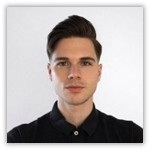
Samuel Knoedler, MD — Germany
Foad Nahai Patient Safety Award Winner
We are thrilled to spotlight the recipient of the 2026 Foad Nahai Award for Patient Safety. This prestigious award is given to the most impactful published work in aesthetic plastic surgery focused on patient safety. This year, we enthusiastically recognize Dr. Samuel Knoedler for his remarkable article, Safety of Combined Versus Isolated Cosmetic Breast Surgery and Abdominoplasty.
ISAPS: Congratulations on receiving the esteemed Foad Nahai Award! What does this award mean to you, and why is it significant?
KNOEDLER: Receiving the Foad Nahai Award is a tremendous honor, and I am genuinely grateful for this recognition. What makes it particularly meaningful to me is its focus on patient safety. In aesthetic surgery, we naturally strive for the best possible aesthetic outcome, but even the most beautiful result loses its value if it comes at the expense of safety. To me, safety is therefore not an additional endpoint of good surgery; it is a conditio sine qua non.
I also regard this award as recognition of the entire team behind the study. Research of this scale is inherently collaborative, and I have been fortunate to work with exceptional colleagues across institutions and countries. I would especially like to thank my brother, Dr. Leonard Knoedler, as well as my mentors, Dr. Adriana Panayi and Dr. Dennis Orgill, whose guidance, scientific rigor, and trust have shaped not only this project but also the way I approach research and academic surgery more broadly.
What I particularly appreciate about this study is that it addresses a very practical question that surgeons and patients face every day: when is it reasonable to combine aesthetic procedures, and when might staging them be the better choice? I do not think meaningful patient-safety research should simply divide procedures into “safe” and “unsafe.” Its role is to provide the evidence that allows us to make more nuanced decisions and to better understand which procedure is appropriate for which patient and under which circumstances.
For me, that is ultimately what makes this award so meaningful: it recognizes research that can translate into better-informed conversations with patients, more thoughtful surgical decision-making, and, ultimately, safer care.
ISAPS: Your paper emphasizes the critical importance of safety in performing abdominoplasty and breast surgery as a combined procedure. Can you explain the reasons behind common misunderstandings? And what recommendations do you have?
KNOEDLER: One reason for these misunderstandings is that combined aesthetic surgery is often discussed as though it were one uniform category. In reality, there is no single “combined procedure.” For instance, an abdominoplasty combined with breast augmentation is quite different from an abdominoplasty combined with breast reduction, both in terms of operative complexity and patient characteristics.
Our results also illustrate why the comparator matters. When combined breast surgery and abdominoplasty were compared with abdominoplasty alone, we did not observe a significant increase in overall, surgical, or medical complications, although the risk of reoperation was higher. By contrast, when the same combined procedures were compared with isolated breast surgery, the risk of overall and medical complications was significantly higher.
This is an important distinction. It suggests that much of the additional risk is related to the abdominal component itself rather than simply to the fact that two procedures are performed during the same operation. At the same time, we found that the specific breast procedure clearly matters: breast augmentation combined with abdominoplasty was associated with fewer overall complications than breast reduction combined with abdominoplasty.
I would therefore be hesitant to give a blanket recommendation either for or against combined surgery. The more useful principle is careful patient and procedure selection. Age, BMI, ASA classification, diabetes and other comorbidities, anticipated operative time, and the complexity of the planned breast procedure all deserve consideration. Notably, patients undergoing combined procedures in our study tended to be younger and healthier than those undergoing abdominoplasty alone, suggesting that surgeons may already be exercising a degree of risk-based patient selection in clinical practice.
I also think it is important to remain modest about what the data can tell us. The database analyzed in this study records 30-day outcomes, but several issues that are highly relevant in aesthetic surgery, such as seroma, capsular contracture, implant malposition, and patient-reported satisfaction, are not adequately captured in this dataset.
For me, the practical message is therefore not that combined surgery is inherently safe or unsafe. It is that it can be a reasonable option in appropriately selected patients, provided that the additional procedural burden is understood and discussed transparently.
ISAPS: You recently joined ISAPS and said one reason was your commitment to international collaboration, scientific innovation, and ongoing education in aesthetic plastic surgery. How does ISAPS support these values, in your view?
KNOEDLER: Aesthetic plastic surgery is, by its nature, an international discipline. Techniques evolve in different countries, often in parallel, and some of the most interesting advances occur when these different perspectives meet.
That is what I find particularly compelling about ISAPS. It brings together surgeons from very different healthcare systems, training backgrounds, and surgical traditions, all discussing many of the same clinical questions. The fact that colleagues may approach the same problem differently is not a limitation; it is precisely what makes that exchange so valuable.
From a scientific perspective, international collaboration also keeps us intellectually honest. It challenges the assumption that the way something is done at one institution is necessarily the best or only way. It allows observations to be tested across populations and settings and ultimately helps us generate evidence that is more generalizable.
And then there is education. Ultimately, the purpose of research is to improve the care we provide to our patients. But even strong evidence can only have an impact if it is effectively communicated and reaches the colleagues who can translate it into clinical practice. This is where organizations such as ISAPS play an important role: they provide a global platform for sharing new knowledge, discussing it critically, and making it accessible to surgeons around the world. That combination of scientific exchange, education, and international perspective is one of the main reasons I was excited to become involved.
ISAPS: What does it mean to be a part of the #ISAPSFamily ...
KNOEDLER: For me, the word “family” in this context is really about community. Plastic surgery has given me the opportunity to work with and learn from people in many different countries, and one thing that becomes clear very quickly is how much we share despite differences in training systems, institutions, or cultures. At the end of the day, we share a very simple ambition: to use our skills to put a smile on our patients’ faces while achieving that goal as safely as we possibly can.
That balance between creating meaningful change and assuming responsibility for how we achieve it is, to me, at the heart of aesthetic surgery.
Being part of the #ISAPSFamily means having an international community in which these questions can be discussed openly. It means learning from colleagues with decades of experience, exchanging ideas with peers, and hopefully contributing something useful in return.
I am still relatively new to ISAPS, which makes that especially exciting for me personally. I am looking forward to getting to know more colleagues, building collaborations, and becoming more involved over time. I also really enjoy working with medical students and other early-career researchers, and I am always happy to connect with people who share that enthusiasm for research and academic plastic surgery.
ISAPS: Which topics at the ISAPS World Congress in Cancún interest you the most? What are you hoping to learn while you're there?
KNOEDLER: I am particularly interested in the areas where surgical technique, clinical judgment, and evidence intersect. Aesthetic breast surgery and body contouring are obvious interests of mine, but I am especially drawn to discussions around patient selection, complication prevention, and how we can make increasingly complex aesthetic procedures safer and more predictable.
These questions also closely reflect some of my current research interests, particularly AI-assisted outcome prediction and risk stratification in aesthetic breast surgery. We are exploring how large clinical datasets and data-driven models can help identify meaningful patterns of postoperative risk and support more individualized patient selection. What interests me most is not simply whether we can build increasingly sophisticated models, but whether they provide clinically meaningful information that complements surgical judgment and improves patient counseling.
At the same time, one of the things I value most about international meetings is the unexpected learning. Some of the best ideas do not necessarily come from the lecture you specifically planned to attend. They may come from seeing a colleague approach a familiar operation differently, discussing a study over coffee, or hearing a perspective that challenges something you had taken for granted.
So I am coming to Cancún with specific scientific interests, but also with a great deal of curiosity. If I leave with a few new ideas, a few new collaborations, and perhaps one or two assumptions that have been challenged, I would consider that a very successful congress.
Join us at the ISAPS World Congress in Cancún, Mexico,
to meet Dr. Samuel Knoedler as he receives his award!
Read more interviews!