
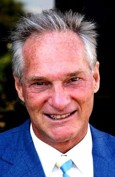
Gottfried Lemperle, MD — Germany
Founder of INTERPLAST-Germany e.V.
This month, we recognize United Nations World Humanitarian Day on August 19 and are pleased to introduce our 2026 ISAPS Humanitarian Award recipient, Dr. Gottfried Lemperle, from Germany.
For ISAPS, humanitarian work goes far beyond the operating room. It restores dignity after trauma, offers renewed hope to patients facing life-altering conditions, and expands access to high-quality surgical care in underserved communities worldwide.
Accordingly, we established the ISAPS Humanitarian Award, which honors individuals who have demonstrated exceptional commitment and made a profound, enduring impact through outreach initiatives, showing compassion, integrity, and global responsibility toward patients and communities. We are honored to announce that Dr. Gottfried Lemperle was selected as this year’s recipient.
ISAPS: Congratulations on being selected as the 2026 Humanitarian Award winner! How does receiving this recognition make you feel, and why does it hold special significance for you?
LEMPERLE: Receiving this award came as a great surprise to me and, of course, honors the entire INTERPLAST-Germany Non-Government Organization (NGO), with all its now more than 2,000 active and associate members from 10 specialist fields. “No matter how great a warrior he may be, a chief cannot win a battle without his Indians.” In this increasingly unjust world, I am delighted to see this organization grow. The spread of Donald Laub’s idea across all of Europe is primarily thanks to my successor, Dr André Borsche, the current Chairman of INTERPLAST-Germany.
ISAPS: Looking back on your humanitarian journey, what experiences have had the greatest impact on you, both professionally and personally?
LEMPERLE: Genetically, I have always been an altruist. As a student, I switched from architecture to medicine at an early stage to become a missionary doctor at the Mennonite Hospital at Kilometer 81 in Paraguay, which a friend of my father’s had founded after the Second World War and was looking for a successor to look after the many indigenous villages.
Later on in Frankfurt, thanks to the airport, aid NGOs referred the first young patients with severe noma lesions on their faces to our department. When our hospital was no longer willing to cover the treatment costs, the necessary consequence — for tax reasons — was the establishment of INTERPLAST-Germany in 1980. I never thought about what INTERPLAST means to me, but always about how it can help others.
ISAPS: With so many young surgeons entering our specialty, what guidance would you offer to ISAPS residents seeking to integrate humanitarian service into their professional development? What qualities or mindset do you believe are most important?
LEMPERLE: A prerequisite for taking part in a mission is, of course, thorough training in reconstructive surgery, as the cases usually involve congenital malformations and burn contractures that are beyond the capabilities of local surgeons.
Apart from the immense experience of achieving comparable results even under rudimentary surgical conditions, INTERPLAST missions are not only about giving but also about receiving. We don’t just return home delighted that we have changed so many lives through our operations; we are already planning our next mission. Without this positive experience, colleagues from 16 German cities would not be operating on around 4,000 patients worldwide every year!
ISAPS: Can you share one of the most memorable experiences from your many missions abroad?
LEMPERLE: Every mission has its own special highlights — but also its challenges. In Africa, for example, neurofibromas or tumors on the face often grow to twice the size of a fist if left untreated.
But my most effective and sustainable three missions were at a small hospital in northeastern El Salvador, where I assisted the local surgeon with the full range of cleft surgery for 14 days. He wrote to me enthusiastically that he had since operated on several hundred cleft patients, and that his hospital’s name was now known throughout the entire Northeast for cleft surgery.
ISAPS: What does it mean for you to be part of the #ISAPSFamily, and in what ways has your journey as an ISAPS member shaped your commitment to assisting underserved populations?
LEMPERLE: ISAPS and aesthetic surgery have been my home throughout my life, and I have taken great pleasure in publishing and discussing the subject extensively. One advantage was my thorough training in general and reconstructive surgery. That is why I am trying to share this good fortune with those who have spent their whole lives “on the shady side of the street”. But to be clear, it was the good income from aesthetic surgery that made the first INTERPLAST missions possible.
Join us at the ISAPS World Congress in Cancún, Mexico,
to meet Dr. Gottfried Lemperle as he receives his award!
We also want to take this opportunity to congratulate Drs. Andre Borsche (Chairman of INTERPLAST-Germany e.V.) and Tomas Kempny, who were recognized for their outstanding contributions and dedication to humanitarian causes.
The next opportunity to submit nominations will open in 2027. To learn more about how to nominate an individual, please visit the website.
Read more interviews!