
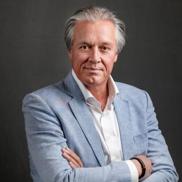
Patrick Tonnard, MD – BELGIUM
Discover the inspiring journey of a true influencer in aesthetic plastic surgery and uncover what sparked his passion for the field. For 25 years, Dr. Patrick Tonnard has been a valued member of ISAPS, and we are proud to celebrate him as part of our #ISAPSFamily.
ISAPS: We'd love to hear your story. Where did your journey begin, and what places shaped your early years? What inspired you to pursue medicine, and when did you become passionate about plastic surgery?
I don’t have any medical background in my family. My parents were simple, hard-working people. My father built a wine and liquor business out of nothing. He gave me the advice never to be frustrated. “What somebody else can do, you can do as well and probably better …” was one of his one-liners, and I tried to incorporate this in my life. I have always dreamed of becoming a physician since I was very young. And so, it happened. My first encounter with plastic surgery was in my second year of medicine (1981). I was watching Professor Guido Matton, the first fully US (Dukes) trained plastic surgeon in Belgium, performing a cleft lip repair, and I was so impressed! His surgery was so elegant, not one superfluous movement, like a meditation in motion. I asked him if I could watch more surgeries in my free time, and we became good friends. In that period, both my parents died suddenly, and he kind of became my second father. Another surgeon who influenced me a lot was Fernando Ortiz-Monasterio, the Mexican icon in craniofacial surgery. I did a 6-month fellowship in his department, and I learned so much from him. He had a very logical, no-nonsense approach to solving surgical problems and an incredible sense of humor; meanwhile, he always remained a very distinguished gentleman. He did a rhinoplasty in 20 minutes including cartilage grafting and believe me, his results were outstanding!
ISAPS: At the beginning of the century, your facelift technique, MACS-lift, became a turning point in facial rejuvenation. Can you share how this idea originated and how it developed?
At the end of the last century, I associated with my friend Alexis Verpaele, with whom I studied together. We both have completely different personalities, and that worked really well in a synergetic way. We analyzed, discussed surgical techniques, and tried to optimize results. One of my first facelift patients developed a massive haematoma in the retroauricular region. I was still working in a general hospital, and unfortunately, the nurse called me many hours after the bleeding developed, resulting in substantial retroauricular skin necrosis. From then we were looking to modify the facelift without retroauricular dissection. We were inspired by a technique described by the Turkish facial plastic surgeon Zia Saylan, who described the “S-lift.” We changed and modified some principles of his technique and published a series of patients in the Plastic and Reconstructive Plastic Surgery Journal in 2002. It is basically a short scar, vertical vector facelift on the deep tissues and on the skin, omitting the need for a retroauricular dissection, when possible, which saves a lot of time. A few years later, I met Sam Hamra at an American Society for Aesthetic Plastic Surgery meeting (ASAPS, now The Aesthetic Society), and he said to me, “You know, I reviewed your paper. I don’t agree with anything you guys described, but it was well written, a nice series, and good pictures, so my advice was to accept it.” I think that was very open-minded of him and typical for a great master. The MACS-lift works well in a younger patient population between 40 and 55 years. Later on, we combined it with many other ancillary procedures, such as fat grafting, lip lifting, temporal lifting, deep neck work, etc., to optimize the result according to the patient’s needs. “No Key fits every lock,” said Tom Biggs, or as Foad Nahai said, “There is no facelift for all seasons.” A few years earlier, Sam Hamra described his “deep plane facelift,” which was quite an invasive procedure. We offered a lighter, less invasive alternative. You can see historically that surgical techniques change like a moving pendulum, from simple to complicated, from minimally invasive to extremely invasive. Now we are witnessing a new revival of the deep plane technique, mainly promoted by social media.
ISAPS: Rejuvenation has been part of surgical and non-surgical procedures for a long time; this idea is transforming, and lately, you've started speaking about how we can reverse or even delay the aging process. How did these concepts materialize, and how is it progressing?
My interest in anti-aging, better described as prejuvenation (preventive rejuvenation, as being against something is not a positive attitude), was stimulated when we started to understand the regenerative properties of fat tissue. Classical medicine is quite a reactive medicine. We wait until we are diseased, and then we treat the disease. Unfortunately, we are often too late to cure the disease completely. Over the last decade, many scientists have proposed treating aging as a disease and combating aging to avoid or postpone many age-related diseases. This makes a lot of sense to me as it is a more proactive, preventive way of practicing medicine. The same can be done in rejuvenation surgery; instead of waiting until sagging, wrinkling, and skin deterioration appear, we can do our best to avoid these problems, or at least postpone them. For the moment, we are not far enough along to avoid surgery, but I think in the future there will be techniques that preserve our integrity and prevent the aging process. Better understanding our biology will be the key to progress, and not shortcuts like the industry wants us to believe, with fillers and energy devices. Science and technology are progressing in exponential ways, and I think what will happen in the next decade will be comparable to what has changed in the last 200 years. So yes, I think we will soon better understand the aging process and be able to combat and eradicate the consequences of it completely.
ISAPS: Do you believe that anti-aging therapies should be included in plastic surgery training? Why or why not?
I think so, yes indeed, because our patients don’t just want to look younger, they want to be younger. For so many years, we have been working on the surface: eradicating wrinkles, tightening the skin, removing skin spots ... But this is just the tip of the iceberg, the symptoms of the aging process. The real problem starts much earlier, deep under the skin at the tissular, cellular, and molecular levels. By better understanding this, we can offer better therapies that make more sense in the long run. For a long time, I thought I needed an anti-aging physician in my practice, but I realized it’s better to do it yourself. We need to study more and offer our patients new possibilities. We now have a complete range of biomarkers and genetic and epigenetic analyses that can provide us with a lot of data, and thanks to artificial intelligence (AI), we are starting to gain better insight into what is going on in our bodies. Much of the biohacking is not about taking a dozen pills a day, but about inexpensive lifestyle choices everybody can make. Educating our patients is part of our job, otherwise we are just technicians. If you incorporate anti-aging advice into your practice, you will be surprised how much your patients will appreciate it.
ISAPS: Would you share a memorable anecdote from your remarkable career journey?
The most satisfying reward we can experience in our job as an aesthetic surgeon is the gratitude a patient expresses after surgery. Some patients really transform into happier and more complete people. The most extreme case I remember was a 65-year-old lady who was scheduled for facelift surgery, but after analyzing her blood, she showed marked disturbances in her liver enzymes. The surgery was postponed to investigate her problem, and the diagnosis of an onsetting alcoholic liver cirrhosis was made. The patient, who was a habitual drinker without any social problems, was shocked by the diagnosis and immediately stopped all alcohol consumption. She was really longing for the facelift surgery, and six months later, upon normalization of the liver enzymes, the surgery was performed. Six months later, I received an official invitation from her husband, a successful and wealthy businessman, to a gastronomic dinner at the best restaurant in Belgium. That evening, he thanked me not only for the result of the surgery but for changing his wife into a new person. Part of it was my job, most of it was hers. I think most patients forget what you say to them; often, they even forget what you did to them, but they will never forget how you made them feel. And finally, this is what aesthetic surgery is all about: how we make patients feel about themselves.
Read the entire 20.1 issue here.
Read the ISAPS NEWS