
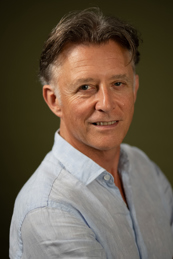
ALEXIS VERPAELE, MD, PHD – BELGIUM
ISAPS Education Council Focus Group – Regenerative Medicine
Getting to know Alexis Verpaele ...
Dr. Alexis Verpaele is a distinguished and influential figure in aesthetic plastic surgery, renowned for his expertise and innovative approaches. His groundbreaking collaboration with Dr. Patrick Tonnard on the widely celebrated MACS Lift technique has revolutionized facial lifting procedures, enhancing safety and aesthetic outcomes for patients. Delve into his rich background, explore his achievements, and uncover the motivations that fuel his passion for advancing surgical artistry and patient care.
ISAPS: Alexis, could you tell us a little about yourself, your background, and your history before becoming a career surgeon? Where are your family’s roots? Where did you go to medical school?
I was born and raised in the city of Ghent in Belgium. I have no doctors in my family. My father was a very severe man and a state attorney, and my mother was a French teacher. I have one younger brother who is an engineer. I went to a Jesuit school, which I believe laid the basis for a number of my qualities, such as perseverance, scientific curiosity, and meticulousness.
I love life, and I want to enjoy as much as possible of everything that it has to offer. I am very passionate about everything that I do, and that includes not only my profession but also my hobbies. As in the song, “Music was my first love,” playing the piano or the guitar really takes me away. My main sport is sailing, but I basically enjoy all water sports. In winter, I go snowboarding and try to keep my body fit year-round. Reading, art, and architecture also provide a great source of mental well-being. Of course, my two sons, Rémi and Louis, are the greatest joys in my life, and I am ever grateful for having been blessed with them.
ISAPS: Describe your path to becoming a plastic surgeon, who were your mentors, and what inspired you?
Very early in my medical studies at the University of Ghent in Belgium, I realized I would become a surgeon. During general surgery training, Patrick Tonnard, my fellow resident and now associate for more than 25 years, ignited my curiosity about plastic surgery. The creativity, the vastness of the plastic surgery field, and also the aesthetic aspect soon raised my interest. This was really what I was meant to do.
After being fully certified as a General Surgeon, my plastic surgery training started in Norwich, United Kingdom, where I had a great exposure to the whole scope of reconstructive plastic surgery, including hand surgery, burns, breast recon, head and neck, and cleft lip reconstruction. Then I returned to Ghent under Stan Monstrey, where I joined the team involved with the development of free perforator flaps.
I went to Paris to learn autologous ear reconstruction with Francoise Firmin, a true “grande dame”. But aesthetic surgery has been my true love from the very start, and my practice gradually polarized towards being 100% cosmetic. I then joined Patrick in his private office in 1999, which has been a fruitful cooperation from the very start, and still is.
Plastic surgery gives me daily fulfillment. I believe that to realign people’s looks with how they feel inside is a wonderful ability for which I am ever grateful. Ian Jackson, Mark Constantian, Joe Hunstad, Peter Nelligan, Giovanni Botti, Mario Pelle-Ceravolo, Richard Bensimon, and Andre Auersvald are only a few of the many plastic surgeons who have inspired me, and whom I have had the great chance to get to know personally.
ISAPS: The development of the MACS-lift was a turning point during the first years of this century. While you were working on it, did you have any idea of the magnitude of its success and the repercussions it would have on our specialty? How was it developed into the success we know today?
The MACS-lift originated from the gap we felt between the desire to offer a face lift and many patients' reluctance to the idea. In the late 90s, face-lifting was still a challenging enterprise for many plastic surgeons, and the results presented were often far from what we had in mind: a powerful technique delivering a non-operated look and at a “low cost” in complications or face-lift stigmata. We developed the MACS-lift from other short-scar techniques, such as the S-lift, and gradually presented our results in meetings. Initially, there was quite a bit of skepticism towards the technique, but as time went on, we could present ever longer follow-up results, and interest grew. We could not believe our ears when we were asked to write a book on the MACS-lift, thanks to Foad Nahai's introduction of us to Karen Berger at Quality Medical Publishing, Inc.!
That book really popularized the technique. I believe the MACS-lift has lowered the threshold towards face-lift surgery for many surgeons, as it is safe and quite accessible while delivering predictable and pleasing results with good longevity. Combined with powerful gestures such as centrofacial microfat grafting, deep neck lifting and the gliding brow lift, the MACS-lift is still the cornerstone of a very effective, safe and durable facial rejuvenation surgery strategy.
ISAPS: Having been a protagonist of a paradigm shift and, at some point, a visionary of the simplest way of surgical facial rejuvenation, how do you see the future of facial surgery and anti-aging therapies?
Aesthetic surgery certainly hasn’t reached its expiration date, contrary to what many cosmeticians and the industry tend to proclaim. The enchantment of “non-invasive” treatments with “energy devices” and “biostimulators” is currently giving way to the reality that a surgical result can never be achieved or replaced by any of these strategies. Furthermore, the damage that some of these therapies cause, such as fat atrophy, subcutaneous scarification, and intractable deformities, is gaining more and more attention on social media.
We are only scratching the surface of the possibilities for using autologous tissues, cells, and their secretomes to slow the aging process and, hence, “pre-juvenate” our patients. The surgical techniques are further refined, and peer-to-peer communication has never been more productive through in-depth, specialized discussion groups on WhatsApp and other platforms.
ISAPS: Can you share a memorable anecdote from your years as a plastic surgeon, and why does it resonate with you?
We were once visited by Luiz Toledo from Brazil, who came to follow some of our MACS-lift surgeries. He shared some wisdom that has given me guidance to this day. He said, “When you are confronted with a problem during surgery, remember these three things:
1. Check and double-check. There is always the chance that you have overlooked something crucial
2. Keep thinking. Never lose your ability to reason and to search for a solution to your problem. Panic is the greatest enemy of a surgeon.
3. Never give up! As physicians, we know that giving up is not an option. If you persist, if you are resilient, you will prevail and find a solution.”
We quoted this in our first MACS-lift book, and I like to share this with our fellows as “The Toledo Triad.”
Read the full 19.4 issue.
Read more ISAPS News Issues